
History of Millpond
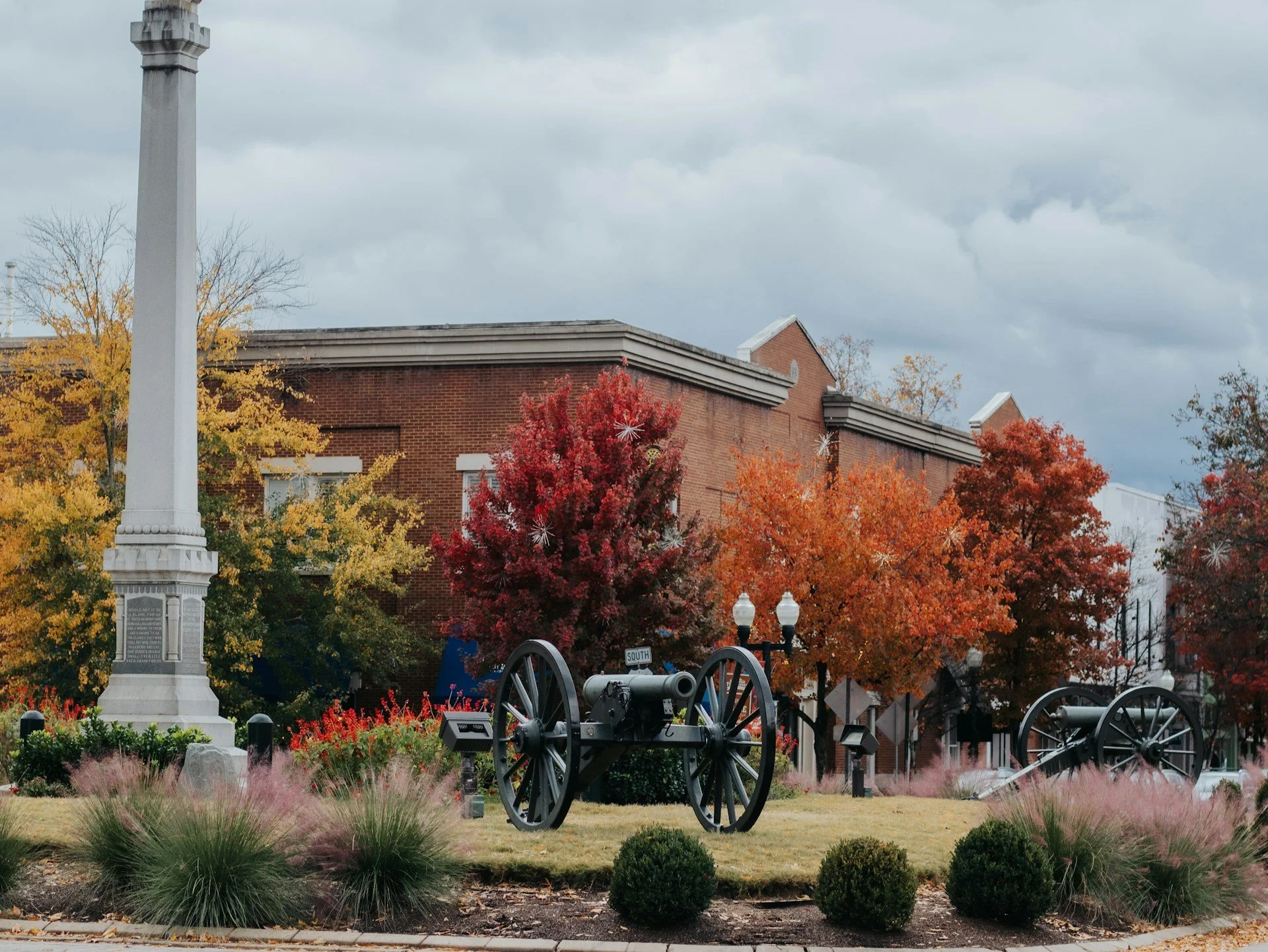
Millpond is just like any other town in the United States - built on the American Dream. Founded in the mid 1600s, this town was no more than a small settlement. It was comprised of huts, stables, farmland and a church (St Thomas’ Church). Throughout the centuries, the land was developed, houses were built and railroads were installed. We have the Archingolds to thank for that. Their influence brought an abundance of jobs and wealth to the area, watching it prosper and flourish beyond their own wildest dreams.
Today, Millpond is a beautiful New England coastal town that enjoys visitors all year round. It’s residents are proud to be a part of Millponds history, but beneath the sleepy, calm streets and white picket fences, secrets lay buried deep within the soil. Check out the Musket Museum to understand more about the bloody and the brutal past it once had. You’ll learn of stories, some whispered to be true, others rumoured and elaborated on. Immerse yourself in its culture, and learn what it’s like to live and breath as a true Millpondian.
Who are the Archingolds?
You can’t talk about Millpond’s history without touching upon the the Archingold name. Their mark on this town runs deep - two hundred years deep. It’s almost impossible to find any stone in this corner of New England not influenced by their presence. Their story is the thread that weaves through the fabric of this town.
The Archingold Estate 1799 - 1979
-
Ambrose Archingold was born in 1799 to Winston and Mary Archingold, who resided in a modest farm on the outskirts of what would later become Greenville. Ambrose had two siblings, Calvin and Sarah.
He had a gift and was literate in a time when few were. Ambitious in a place where most were not. Even as a boy, he wanted more than what the toiling life could give him.
-
Ambrose returned to Millpond with a wife - Ellenor Holmesworth - equipped with more knowledge and a refined understanding of the law, contracts, land, and leverage.
He opened his own solicitation firm and began quietly influencing the town’s folk on property, trade, and development.
Millpond expanded quickly.
So did the Archingold name.
-
In his late teens, Ambrose left the family home for Waterscreed, a port town located north of Millpond. Newly energised as a free state and thick with opportunity after the Revolutionary War.
It was there he witnessed his first public killing, when a thief was shot dead by police - an event that would shape his thinking in the years to come. He did not leave Waterscreed unchanged.
-
Rupert (1836), Jacob (1837), and Arabella (1840) were born into flourishing prosperity. Meanwhile, Ambrose’s brother Calvin (1800–1904), who was physically impaired from a childhood accident, proved he had a gifted mind in engineering and design.
The family’s influence deepened.
-
With national tensions rising, Ambrose’s past had resurfaced. Remembering the man that had been shot in Waterscreed brought up new ideas and innovations. A new idea had ignited. He and Calvin incorporated Archingold Ammunitions.
Pivoting industries proved to be worthwhile. Their first rifle, the Archingold ’57, was a huge success and would soon be followed by sidearms and the expanded production of ammunition.
The outrage from the public was strong at first. Protests thwarted and delayed the Archingolds plans, but when the nation broke out in civil war, the people lost the argument.
Manufacturing began on a colossal scale.
-
Shocking news hit the Archingold name when Rupert Archingold died by suicide at age thirty-five, using a Model 18 sidearm manufactured by his father’s company. The tragedy fractured the family.
But good news hit that same year, Ambrose’s brother, Jacob Archingold, welcomed two baby boys - Theodore and William Archingold. Both younger siblings to John Archingold who would later take on the Archingold empire.
After Ruperts death, Ambrose grew increasingly isolated and disdained.
-
Calvin Archingold died one year later under more unusual circumstances. His home was found in disarray. Bottles empty. Furniture overturned.
Witnesses reported he complained of unbearable thirst shortly before his death. The matter was not investigated any further. You can find his headstone at Hallow Hill Cemetery.
-
Permits secured. Investment found.
By Christmas, the largest industrial structure Millpond had ever seen stood in Bloomsdale.
It brought jobs and wealth to the area, marking the moment the Archingolds became untouchable.
-
At age 104, Ambrose Archingold is discovered dead in factory machinery.
The official cause was down to intoxication and a fall from the foreman’s balcony. But in other forums, this is debated heavily. Could it have been foul play?
He had built an empire but now he was dead..
-
Jacob Archingold (1837–1915), known by some as “Smiling Death,” disappeared in a car accident at Hanock Bridge.
His body was never recovered.
His vehicle surfaced in 1997 during unrelated dredging operations but it showed no visible deterioration. The Musket Museum is fighting for the vehicle to be stored on display.
-
John Archingold (1867-1941), who modernised the company and improved worker conditions, was struck dead by lightening outside his home in Charleston on a clear summer evening.
No storm was recorded in the county that night. After this, talk of a family curse was no longer rumoured through the taverns, but known as common knowledge.
-
Roger’s extravagant lifestyle eventually caught up with him. He died of a drug overdose outside of Molly Colly Nightclub in 1979 and shortly after, Archingold Automobiles folded.
The empire fizzled out, ending with a whimper, rather than a bang.
-
Roger Tripp, a family friend had vowed to take on the company. Under his leadership, the company pivoted toward automobile production, away from death and destruction.
It brought jobs in for a few decades but ultimately the gamble failed as production for the nation moved to Detroit.
-
The Bloomsdale factories remain, some overgrown, and some have changed hands.
The Archingold Estate on Chestnut Drive sits in Charleston is now a museum, an ode to the past and its founding family. Reports of lights in upper windows and sounds in empty halls persist.
The Archingolds might have built Millpond, but some say, it also destroyed them.